Picture this: You’re wandering through a digital graveyard, where the ghosts of old programming languages float like forgotten legends. It’s eerily quiet, until you start noticing names on the tombstones: ALGOL, COBOL, FORTRAN, LISP, and Ada. These languages aren’t just relics; they’re the ancestors of the code we write today. They’ve got stories, legacies, and even a touch of humour. So why did they fade away?
Chapter 1: ALGOL – The Ancestor We All Forgot
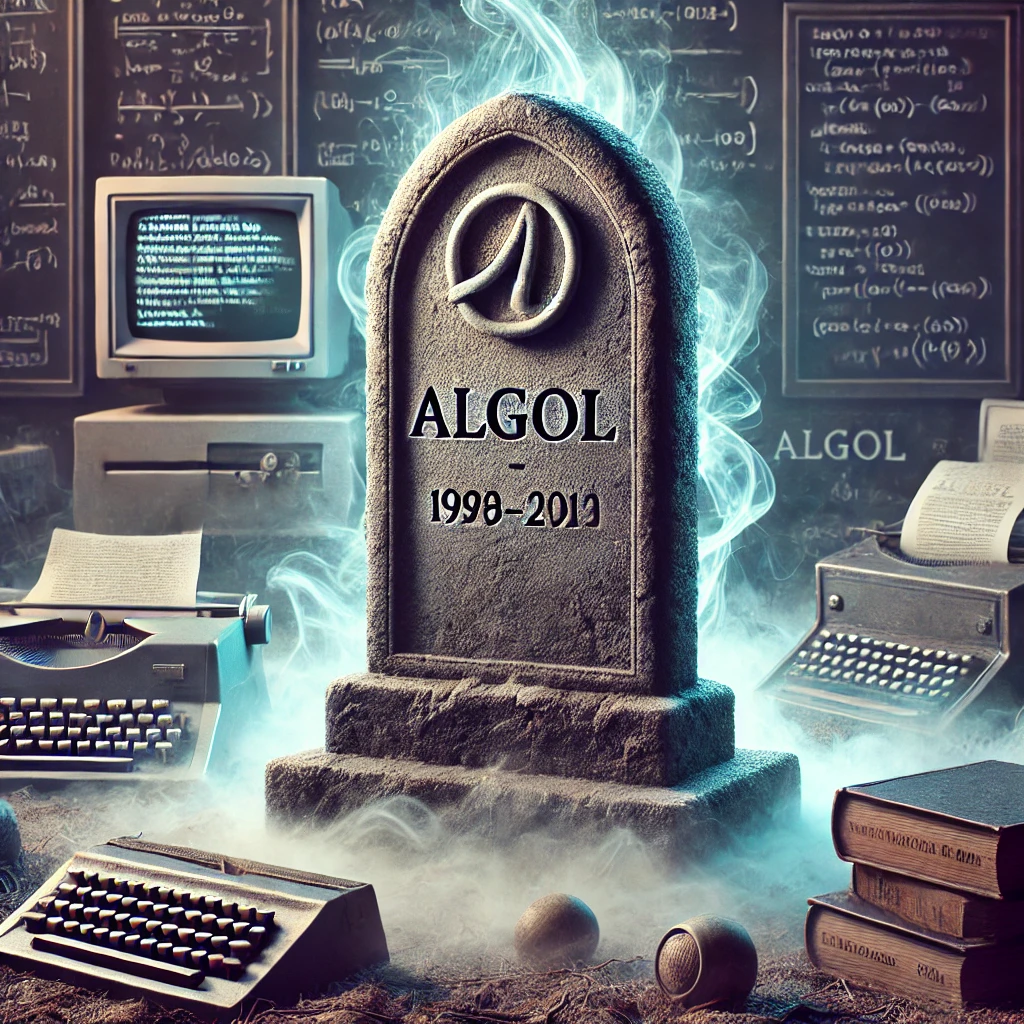
Tombstone Engraving: “Here lies ALGOL, the unsung hero who taught us structure but never got invited to the cool kids’ table.”
The Story:
In the late 1950s, a group of computer scientists got together and thought, “Let’s create a language that’s all about structure and precision.” And thus, ALGOL was born. It introduced concepts like block structure and scope—ideas that are now as common as a cup of tea. Think of ALGOL as the wise old grandparent who taught you how to behave, even if you didn’t always want to listen.
The Decline:
ALGOL was brilliant but a bit too complicated for most people’s tastes. It was like that one teacher who was incredibly smart but made everything sound like rocket science. Eventually, more user-friendly languages like C stole the spotlight, and ALGOL quietly faded into the background.
Echoes in Modern Code:
Every time you write a block of code inside curly braces, you’re channelling ALGOL. It may not be with us anymore, but its influence is deeply woven into the fabric of modern programming.
Chapter 2: COBOL – The Language That Refuses to Die
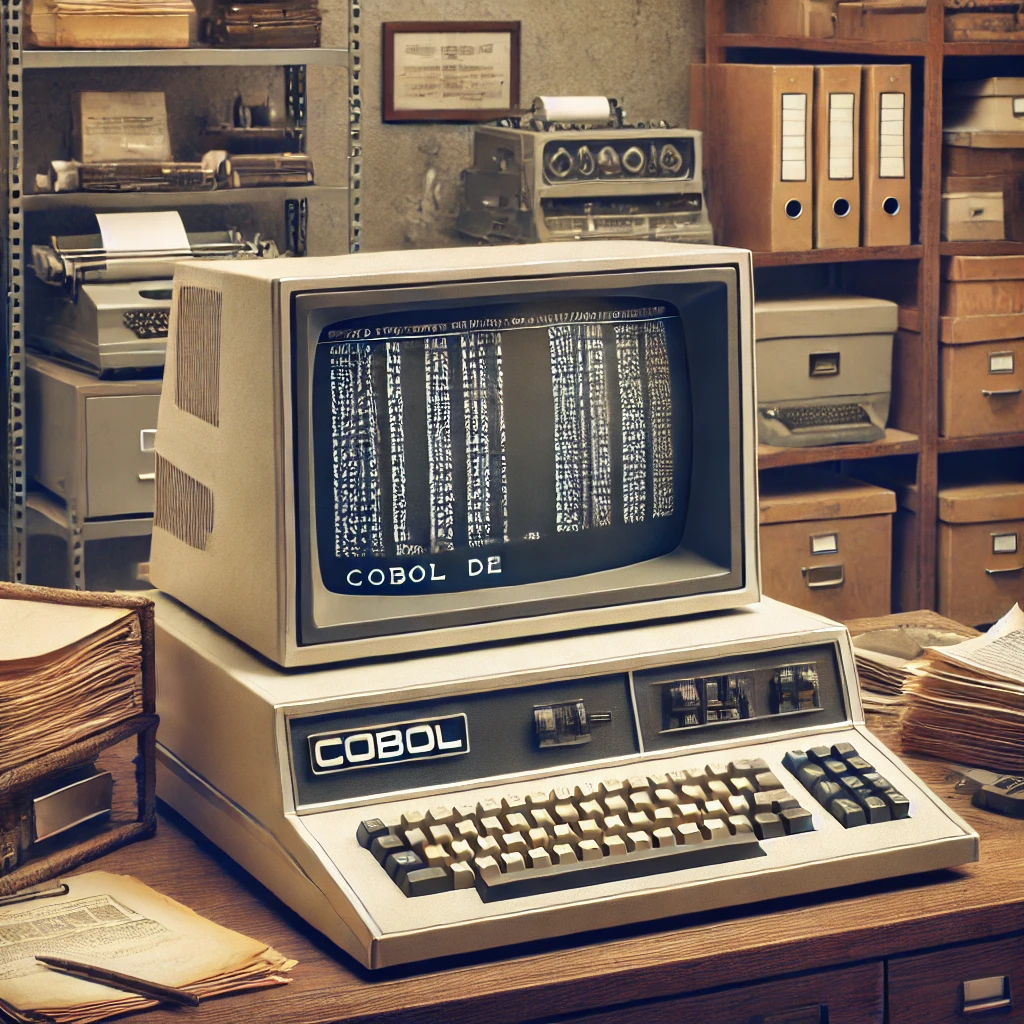
Tombstone Engraving: “COBOL: Old, wordy, but still running the world’s banks and governments.”
The Story:
Born in 1959, COBOL was designed to handle business transactions, and boy, did it deliver. COBOL is like that verbose uncle at family gatherings who insists on telling you every single detail—but in this case, those details keep the world’s banks and governments running smoothly.
The Decline (or Lack Thereof):
COBOL didn’t so much decline as it just… kept going. It’s like that ancient fax machine in your office—outdated but still does the job. Companies still rely on COBOL today, particularly in legacy systems that are too costly to replace.
Echoes in Modern Code:
Even if you don’t write COBOL, the importance of clear, readable code hasn’t been lost. Modern languages emphasise readability and maintainability, lessons COBOL drilled into us with its verbose but clear syntax.
Chapter 3: FORTRAN – The Scientist’s Best Friend

Tombstone Engraving: “FORTRAN: The number-crunching wizard that powered scientific discoveries.”
The Story:
FORTRAN, short for FORmula TRANslation, was the go-to language for scientists and engineers from the 1950s onwards. If it involved complex mathematical computations, FORTRAN was the tool for the job. It’s the mathlete of programming languages—the one who always aced the exams and went on to do something incredible, like designing rockets.
The Decline:
FORTRAN still lingers in some scientific circles, but it’s largely been replaced by more versatile languages. It’s like the slide rule—once essential, now mostly a relic. However, in fields where number-crunching power is everything, FORTRAN is still very much alive.
Echoes in Modern Code:
Whenever you see a language optimised for performance, you’re witnessing FORTRAN’s legacy. It taught us that sometimes, speed really does matter.
Chapter 4: LISP – The Parenthesis Overload
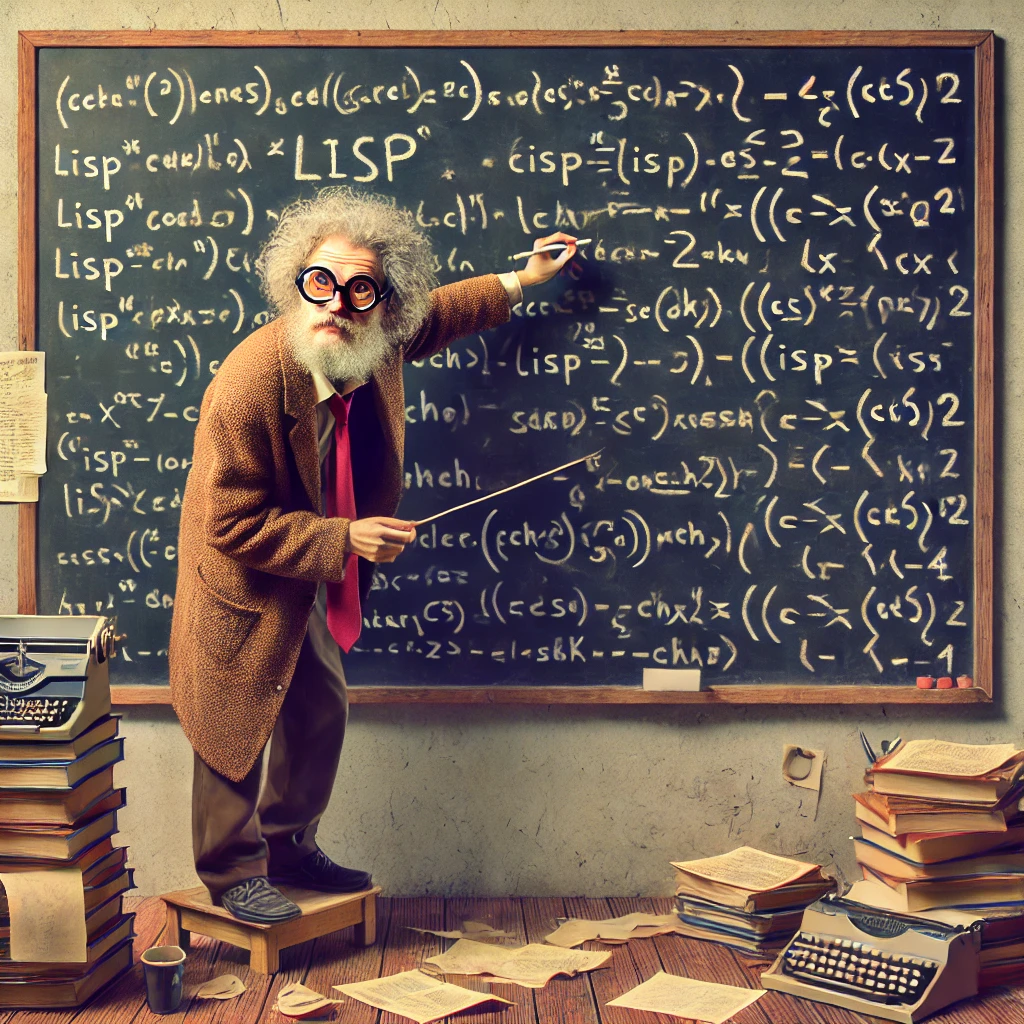
Tombstone Engraving: “LISP: Loved by AI researchers, feared by everyone else.”
The Story:
LISP was created in the late 1950s for artificial intelligence research. It’s one of the oldest high-level programming languages still in use today. LISP is like the eccentric artist of programming languages—innovative, a bit odd, but undeniably brilliant.
The Decline:
LISP’s heavy use of parentheses made it a bit hard for many to embrace. It’s a bit like trying to read a book where every sentence is wrapped in multiple layers of brackets. Over time, more straightforward languages like Python took over, especially in AI research.
Echoes in Modern Code:
LISP introduced concepts like garbage collection and recursion, which are now commonplace in many modern languages. If you’ve ever used a functional programming language, you’ve got LISP to thank.
Chapter 5: Ada – The Language of Safety

Tombstone Engraving: “Ada: The code that doesn’t mess around when lives are on the line.”
The Story:
Ada was developed in the 1980s for the U.S. Department of Defense. Named after Ada Lovelace, the world’s first programmer, Ada was all about safety and reliability. It’s the overprotective parent of programming languages—strict but with good reason.
The Decline:
Ada is still used in highly specialised fields like aerospace and defence, but it never gained widespread popularity. It’s like the manual transmission of programming languages—super reliable but a bit too much work for most people.
Echoes in Modern Code:
Ada’s emphasis on safety and strong typing influenced many modern languages. In fields where failure is not an option, Ada’s principles still guide the way.
Epilogue

Why should we care about these dusty old languages? Because they’re the foundation on which modern programming is built. Understanding their quirks, strengths, and weaknesses gives us a deeper appreciation for the tools we use today. Plus, there’s something poetic about knowing the history of your craft—about acknowledging the giants on whose shoulders we stand.
So, next time you’re coding in Python, JavaScript, or whatever the latest trend is, take a moment to remember the forgotten languages that made it all possible. Who knows, maybe one day someone will be writing an epitaph for the language you’re using right now.
Until then, keep coding, keep learning, and never forget where it all started.
